Unleash the Power of Our Cloud-Based Talent Management Software
Signify’s Pollen Series comprises a range of responsive (PC / tablet / mobile) shelf content. The Pollen Series can be customized to align to your organization’s corporate identity at a small customization fee. The Pollen Series is aimed at a Supervisory and Team Leader-level target audience, and includes the following topics:
Use the buttons below to jump to the specific section, then click on the tabs under the sections for more detail.
Personal Mastery
MODULE 1: Creating context
- Understanding the basics of active listening.
- Examining the impact of poor listening on relationships and your life.
MODULE 2: Assessing your listening
- Examining your listening skills.
MODULE 3: Keys to active listening
- Identifying the keys to active listening and how to use them.
MODULE 4: Using questions
- Using different types of questions to improve your active listening.
MODULE 1: Understanding anger
- Understanding anger as an emotion and its impact on you.
- Examining the reasons we get angry.
- Understanding why it's important to control your anger,
- Identifying the consequences of not controlling your anger.
MODULE 2: Taking charge of your anger
- Exploring the golden rules when you're feeling extremely angry.
- Learning the six steps to control your anger.
- Identifying your hot buttons and creating neutralizers for them.
MODULE 1: Creating context
- Understanding the nature of time.
- Analyzing how you spend your time.
MODULE 2: The circle of influence and concern
- Examining the different spheres of your life.
- Identifying what you can control and what you can't.
MODULE 3: Creating alignment between your values and how you spend your time and energy
- Creating priorities of your life.
- Setting goals and developing action plans to achieve your goals.
MODULE 4: Practical time management tools and techniques
- Understanding what the 80/20 principle means.
- Identifying the urgency and importance quadrants.
- Examining work tactics to simplify your day at the office.
- Using routines and schedules to simplify your life.
MODULE 1: The influence of perception on conflict management
- Reframing our perception of conflict towards neutral ground and more productive conflict management.
MODULE 2: Conflict management styles and situational application
- Understanding the different conflict styles.
- Identifying the pros and cons of each conflict style.
- Examining the appropriateness of a conflict management style in a specific situation.
MODULE 3: Conflict management strategies
- Identifying strategies to effectively manage conflict.
MODULE 4: Personal development in action
- Selecting the appropriate conflict resolution response suitable to aspecific scenario.
MODULE 1: Foundational concepts of emotional intelligence
- Identifying what emotional intelligence (EI) is.
- Understanding why EI is important.
- Assessing your current EI.
- Examining how to grow your EI.
MODULE 2: The competencies of emotional intelligence: Part 1
- Examining self-awareness and self-management as
competencies of EI.
MODULE 3: The competencies of emotional intelligence: Part 2
- Examining social awareness and social skills as competencies of EI.
MODULE 4: Practical application
- Discovering interactive emotional self-awareness activities.
MODULE 1: Understanding the nature and impact of offense
- Understanding what taking offense means
- Identify the underlying emotions that lead to offense
- Describing the effects of offense on personal, interpersonal, and work relationships
MODULE 2: Evaluating the role of the self in taking offense
- Reflecting on habits and personality traits associated with someone who is easily offended
- Using self-reflection to shift perspectives on communication
MODULE 3: Creating resilience against offense
- Examining methods to manage emotions effectively and to respond constructively
MODULE 1: Introduction to social influence
- Understanding why social intelligence is important
- Applying a basic understanding of social intelligence concepts
MODULE 2: What is social intelligence?
- Differentiating between IQ, EQ, and SQ
- Explaining the key characteristics of social intelligence
- Identifying the core skills involved in high social intelligence
MODULE 3: Developing social intelligence
- Understanding key strategies for developing social intelligence
Life Skills
MODULE 1: What is stress?
- Understanding the difference between stressors and their impact
on your life. - Identifying sources of stress in your life.
MODULE 2: Toward better balance
- Identifying what causes stress at home.
- Examining strategies for better balance in your life.
MODULE 3: Managing sources of stress
- Identifying what causes stress at work.
MODULE 4: Coping strategies for stress
- Developing optimism and coping skills to minimize the negative
impact of stress on your life.
MODULE 1: Sowing seeds of knowledge
- Defining “learner for life” and the disadvantages of not embracing lifelong learning
MODULE 2: Taking root
- Exploring the benefits of being a learner for life
MODULE 3: Blooming into success
- Unlocking the mindscape of a learner for life
- Explore ways to engage in lifelong learning
MODULE 1: Creating context
- Identifying what resilience is.
- Examining how you benefit from being resilient.
- Identifying the five resiliency assets.
- Examining relationships as the first asset of resilience and the value of good relationships in becoming more resilient.
MODULE 2: Resiliency assets: emotional intelligence
- Examining emotional intelligence as the second asset to develop resilience.
MODULE 3: Resiliency assets: competence
- Examining how problem-solving, decisive action, and perseverance
support resilience in your life.
MODULE 4: Resiliency assets: optimism and coping skills
- Discovering how optimism and coping skills help you to become more resilient.
MODULE 1: Why change is easier for some than others
- Understanding different kinds of change
- Identifying your feelings about change
- Determining your level of control over change
MODULE 2: Reasons for resisting change
- Identifying the top five reasons for resisting change
- Considering different actions to address change resistance
- Reviewing lessons learned about resisting change
MODULE 3: Bolstering change leaders
- Examining Prosci’s five tips to overcome change resistance.
- Identifying Prosci’s top three reasons for change resistance.
- Reviewing the ADKAR® change model as a change leader tool
- Developing resilience in change leaders
MODULE 4: Tips for dealing with change
- Examining the impact of your thoughts, attitude, actions, and routines on your ability to cope with change successfully
- Using your thoughts, attitudes, actions, and routines to help you make change easy
MODULE 1: Deep links: Humility and leadership
- Understanding what humility is
- Understanding the difference between self-deprecation and humility
MODULE 2: Humility doesn’t mean …
- Identifying the top five reasons for resisting change.
- Considering different actions to address change resistance.
- Reviewing lessons learned about resisting change.
MODULE 3: The power of humility in the workplace
- Understanding why humility is important in the workplace
- Understanding how humility can give you a competitive edge in the workplace
MODULE 1: Effective communication gets the job done
- Identifying the key benefits of effective communication
- Distinguishing between assertive, passive, and aggressive communication styles
- Distinguishing between effective and ineffective communication techniques
MODULE 2: Foundations of effective communication
- Differentiating between assertive communication and other communication styles
- Identifying assertive communication and its key characteristics
- Identifying the benefits of asking questions
- Identifying appropriate situations for asking questions
- Differentiating between closed-ended and open-ended questions
- Identifying strategies for asking effective questions
- Explaining how summarizing conversations helps to retain key information
- Identifying the strategies involved in summarizing conversations effectively
MODULE 3: Conflict isn’t scary when you know what to do
- Identifying the benefits of healthy conflict resolution skills
- Identifying key strategies involved in constructive conflict resolution
MODULE 1: Introduction to being financially savvy
- Defining financial security
- Explaining the importance of financial planning
- Identifying the key factors involved in achieving financial security
- Identifying how a budget helps to manage finances
- Applying basic saving principles
- Identifying strategies for building good credit
MODULE 2: The basics of budgeting
- Understanding what a budget is
- Explaining the purpose of creating a budget
- Identifying the key steps involved in setting up a budget
- Categorizing expenses into different groups based on needs and wants.
- Explaining the advantages of saving money
- Identifying practical strategies for building a savings habit
- Differentiating between short-term and long-term savings goals
- Identifying the key benefits of good judgement and decision-making skills
MODULE 3: Building good credit
- Explaining what credit is
- Differentiating between secured and unsecured credit
- Explaining the significance of a good credit score
- Identifying practical steps to building good credit from scratch
MODULE 1: Understanding retirement planning
- Defining retirement planning
- Identifying the questions to ask when planning for your retirement
- Explaining the three stages of retirement planning
- Describing the three most common retirement funds in South Africa
MODULE 2: The importance of saving for retirement
- Describing the different saving milestones to reach during each decade of life
MODULE 3: Catching up on retirement savings
- Identifying strategies to catch up on retirement savings if you’ve fallen behind
- Explaining tips to consider when trying to catch up on retirement savings
Career Management
MODULE 1: What a courageous conversation is and why it is important
- Identifying the issues that need to be addressed during a
courageous conversation. - Determining what to communicate during a courageous
conversation. - Identifying screening questions to determine where a courageous
conversation is required. - Analyzing the steps to prepare for a courageous conversation.
MODULE 2: The keys to a successful courageous conversation
- Discovering the top strategies to ensure a successful outcome
for your conversation.
MODULE 3: Communication skills to make your courageous
conversation work
- Ensuring a more successful courageous conversation in four
easy steps.
MODULE 1: Creating context
- Explaining what coaching is.
- Identifying the rationale for coaching.
- Identifying coaching principles.
- Identifying different roles in coaching.
- Differentiating between coaching and managing in terms of
approach and timing.
MODULE 2: The GROW coaching process
- Analyzing the steps and activities in the GROW coaching process.
MODULE 3: The LEARN coaching model
- Analyzing the principles of the LEARN coaching model.
MODULE 4: Supporting the practical application.
- Examining how to build trust to achieve a successful coaching
outcome.
MODULE 1: Creating context
- Identifying the concept and purpose of mentoring.
MODULE 2: The macro mentoring process
- Analyzing the phases of the macro mentoring process including:
- Phase 1: Establishment.
- Phase 2: Relationship building and implementation.
- Phase 3: Assessment.
- Phase 4: Separation.
MODULE 3: The micro mentoring process
- Identifying six steps to structure any mentoring conversation.
- Examining stakeholder roles in the mentoring process, including
the mentor, the mentee, and the line manager.
MODULE 4: Supporting the mentoring process
- Identifying the nature of the change and transformation that
takes place in a mentoring process.
MODULE 1: Why today’s workplaces need powerhouse employees
- Understanding what the workplace evolution means for employees
- Understanding the two different clans in the workforce and their different ideas
- Identifying the different expectations of experienced and less-experienced employees
- Examining the concerns of experienced employees and employers when hiring new recruits
MODULE 2: Meet the powerhouse employee: What do they do and what are they like?
- Explaining what it means to be a powerhouse employee
- Identifying the characteristics of a powerhouse employee
MODULE 3: Becoming a powerhouse employee
- Explaining different powerhouse skills:
- Sticking it out: Staying in a job for a set period before moving on to the next
- Working smart and hard: Learning new concepts and protocols in the workplace
- Creating good habits: Adapting to workplace norms/habits
- Managing stress: Handling deadline stress, responsibilities, etc.
MODULE 1: Creating context
- Distinguishing between a team and a group.
- Defining group dynamics and how these fit into the stages of
team development.
MODULE 2 : Self-development tool for team leaders
- Maximizing results from your team,
- Using team norms to contribute to collective performance.
MODULE 3: Supporting teamwork through leadership and
management style
- Using the Situational Leadership model.
MODULE 4: Practical tips and tools for team leaders
- Examining tips for effective feedback.
- Identifying ways to improve your team.
- Examining ways to build you team's character.
MODULE 1: What is motivation?
- Defining motivation.
- Understanding how motivation creates purpose.
- Identifying the three components of motivation.
- Understanding internal and external motivation.
MODULE 2: Theories of motivation
- Discovering six of the most common theories of motivation.
MODULE 3: A manager's tips for employee motivation
- Distinguishing between morale and motivation.
- Understanding the impact of good morale in the workplace.
- Uncovering myths about what motivates employees.
- Identifying eight ways for managers to motivate their employees.
MODULE 4: Motivating myself
- Identifying what you really want and need.
- Using 10 steps to motivate yourself.
- Discovering five tips for self-motivation.
MODULE 1: What is self-directed leadership?
- Understanding what self-leadership means.
- Examining why self-leadership has become a critical future skill.
MODULE 2: The self-leadership process: Part 1
- Examining the first part of the self-leadership process.
MODULE 3: The self-leadership: Part 2
- Exploring boundaries and work ethic in your work environment.
MODULE 4: Tips and tools for self-leadership
- Understanding the rationale for prioritizing self-leadership.
- Exploring tips and tools to help you become a self-directed
leader.
MODULE 1: Getting a grip on generational profiles
- Understanding what a “generational profile” is
- Understanding the different generations
MODULE 2: Getting along with each generation
- Describing different generational needs in the workplace
MODULE 3: Practical application
- Applying newly learned knowledge about the different generations in scenario-based questions
Transversal Skills
MODULE 1: Understanding problems
- Defining a problem
- Identifying types of problems
- Defining problem-solving
- Introducing the Simplex Process
- Identifying problem-solving styles
- Recognizing traits of great problem-solvers
MODULE 2: Identify the real problem
- Differentiating between symptoms and root causes
- Define root cause analysis
- Applying the 5 Why technique
MODULE 3: Let’s solve it!
- Differentiating between creative and logical thinking
- Applying creative thinking
- Applying logical thinking
MODULE 4: Implementing solutions
- Applying the Simplex Process to implementation
- Developing an action plan
- Assign roles and responsibilities
- Selling the idea
- Taking action and evaluating
MODULE 1: Creating context
- Understanding what decision-making is.
- Identifying key focus points during the decision-making process.
MODULE 2: Using a decision-making technique
- Determining decision-making criteria.
- Determining how to weigh up alternatives when making
decisions.
MODULE 3: Practical decision-making strategy: Part 1
- Analyzing the Force Field Analysis technique as a decisionmaking
tool.
MODULE 4: Practical decision-making strategy: Part 2
- Examining the Cause-and-Effect Analysis technique for
decision-making.
MODULE 1: Getting to grips
- Identify the benefits of novel and adaptive thinking in the workplace
- Explain novel thinking as generating new ideas and solutions
- Explain adaptive thinking as the ability to adjust and respond to change
MODULE 2: Applying basic concepts of novel and adaptive thinking
- Distinguish between skills associated with novel and adaptive thinking
- Identify examples of novel and adaptive thinking behaviors
MODULE 3: Developing the skill of novel and adaptive thinking
- Identify different strategies for developing novel thinking skills
- Identify different strategies for developing adaptive thinking skills
MODULE 1: Why do I need to know this?
- Identifying the advantages of good judgement and decision-making skills
MODULE 2: The basics
- Distinguishing between judgement and decision-making
- Identifying key elements of good judgement
- Recognizing techniques to improve decision-making
- Defining judgement and decision-making
- Explaining how judgement informs the decision-making process
- Identifying the key benefits of good judgement and decision-making skills
MODULE 3: What’s the difference?
- Explaining the core components of good judgement
- Identifying specific strategies for developing good judgement
- Identifying common roadblocks to good decision-making and tactics to overcome them
- Identifying the key steps involved in improving the decision-making process
MODULE 1: Getting onto the fast track
- Identifying the key benefits of learning agility in changing work environments
- Distinguishing between behaviors that demonstrate adaptability
- Identifying what makes someone an agile learner
- Analyzing how learning agility might be applied in specific scenarios
MODULE 2: The organizational benefits of diversity
- Explaining the main components of learning agility
- Identifying the five factors that influence learning agility
- Identifying the various characteristics of agile learners
- Explaining the specific behaviors and attitudes associated with learning agility
MODULE 3: Becoming an agile learner
- Explaining the benefits of developing learning agility
- Identifying actions and behaviors that contribute to developing learning agility
MODULE 1: What is diversity?
- Understanding what diversity really means.
- Examining the things that make people diverse.
MODULE 2: The organizational benefits of diversity
- Identifying multiple benefits of a diverse workforce for an
organization.
MODULE 3: Making diversity work
- Examining organizational focus points: where to direct energy
and effort to improve diversity management and inclusivity.
MODULE 1: How to restore a relationship
- Identifying our choices in response to our incorrect or
inappropriate behavior. - Understanding why apologies are important.
- Identifying why we don't apologize.
- Discovering four simple steps to make a sincere apology.
MODULE 1: What is disability awareness
- Defining disability awareness
- Explaining why disability awareness is essential in personal, team, and organizational contexts
MODULE 2:
Misconceptions about disability
- Identifying common misconceptions about people with disabilities
- Contrasting misconceptions with facts
MODULE 3: Types of disabilities
- Defining disability types
- Describing main categories: physical, sensory, cognitive, and mental health
MODULE 4: Inclusive work practices
- Recognizing strategies to support inclusion of people with disabilities
- Applying tips to real-world work situations
MODULE 1: A modern business writing mindset
- Explaining why effective writing is a critical skill in today’s workplace
- Identifying the role of clarity, tone, and structure in building credibility
- Identifying and applying the appropriate tone and wording when shifting from informal, everyday communication to formal business writing
MODULE 2:
Core writing principles
- Applying clarity, conciseness, coherence, correctness, and consistency to workplace writing
- Spotting and correcting common grammar and punctuation errors
- Using active voice and plain language to improve readability
MODULE 3: Structure and formatting for readability
- Using headings, bullet points, and white space to guide the reader
- Presenting complex information clearly with charts, tables, or lists
- Applying accessibility best practices in written communication
MODULE 4: Audience-centered writing
- Identifying purpose and desired outcome before writing
- Adjusting tone, style, and content for different stakeholders and levels of formality
- Recognizing cultural considerations in global business communication
MODULE 5: Writing with empathy and professionalism
- Applying positive framing to build trust and goodwill
- Delivering bad news or sensitive feedback with tact
- Using inclusive language in workplace communication
MODULE 6: Writing different document types
- Applying best practices for email, proposals, reports, and presentations
- Avoiding tone and clarity issues common in online posts
MODULE 7: Polishing your writing
- Differentiating between drafting and editing phases
- Applying self-editing techniques to refine clarity and tone
MODULE 8: Generative AI for business writing (BONUS MODULE)
- Describing AI’s strengths and limitations in business writing
- Crafting effective prompts for various business writing tasks
- Fact-checking and verifying AI outputs to avoid errors and bias
- Applying safe data practices when using AI for sensitive documents
ASSESSMENT: The word gym edition
- Applying business writing skills in realistic workplace scenarios
- Building a personalized writing checklist for ongoing improvement
Personal Branding
MODULE 1: Power dressing
- Describing why appearance matters
- Defining the benefits of power dressing
- Explaining the benefits of authentic power dressing
MODULE 2: Decoding professional dress codes
- Describing the evolution of dress codes
- Differentiating between office and online professional dress codes
MODULE 3: Maintaining a professional dress code
- Differentiating between the dos and don’ts of professional dress codes
- Analyzing the norms of workplace dress codes
MODULE 1: How assertive are you?
- Examining the benefits of being assertive in changing your life for the better
MODULE 2: Identify the three behavioral styles and their characteristics
- Examining the passive, assertive, and aggressive behavioral styles
MODULE 3: Habits to help you become more assertive
- Identifying different habits that can help you become more assertive
MODULE 4: Additional resources
- Identifying resources that will help you develop your assertiveness
MODULE 1: Why is a story such a powerful tool?
- Identifying why storytelling is an effective tool.
- Examining what storytelling can do for your message.
POD 3.
MODULE 2: The elements of a good story
- Identifying the framework for a good story.
- Examining the elements of a good story.
MODULE 3: Tips and tools to improve storytelling
- Examining how to immerse your audience in your story.
- Discovering how to create suspense or a sense of wonder.
- Examining how to make people care about your story.
MODULE 1: Planning your presentation
- Identifying the Why, What, and How of your presentation.
- Creating context by examining the facts about your topic.
- Planning your pitch by examining the needs and expectations of
your target audience. - Planning your approach by selecting the right dress code.
POD
MODULE 2: Building your presentation
- Defining your introduction by formulating the background, the
baseline, and the outline. - Identifying and using meaningful information using the SLIDE
technique. - Creating a powerful conclusion by summarizing, engaging
audience participation, and closing with a call to action.
MODULE 3: Rehearsing your presentation
- Familiarizing yourself with the content and practicing the
presentation. - Rehearsing your presentation and making notes.
- Integrating different presentation methods into your delivery.
- Improving your delivery by asking for feedback.
MODULE 4: Delivering your presentation
- Calming your nerves.
- Opening the presentation with a great introduction.
- Using effective body language throughout your presentation.
- Communicating effectively with your audience.
MODULE 1: Understanding the two levels of impact
- Understanding that everyone has an opportunity to impact
- Choosing your level of impact
MODULE 2: Taking ownership of your impact
- Explore how taking ownership and personal authority can lead to making a positive impact
- Identify the benefits of taking ownership of your work
- Explain what personal authority means and how you can improve it
MODULE 3: Small habits to make a positive impact by…
- Believing in your efforts
- Leading by example
- Keeping the bigger picture in mind
- Spreading positivity
MODULE 1: Why your best self is the only self you should be
- Understanding what it means to be your “best self”
- Identifying why you should show up as your best self
MODULE 2: Know yourself – yourself
- Understanding that becoming your best self is a process
MODULE 3: Unleash awesomeness
- Identifying ways to become your best self.
Workplace Conduct
MODULE 1: Conduct guidelines for effective meetings
- Analyzing global meeting statistics
- Understanding how not to behave during meetings
- Identifying the back-to-basics guide for good meetings
- Examining meeting dos and don’ts
MODULE 2: Why meetings don’t work
- Identifying the contributing factors to ineffective meetings, including:
- Information
- Meeting length
- Starting late
- Thinking out loud
- No accountability
- Recap
MODULE 3: Making meetings work
- Examining six methods to ensure your meetings are effective and efficient, including:
- Eighteen minutes maximum
- No chairs
- No cellphones
- Maximum ten attendees
- DRI
- Five-word summary
MODULE 1: Identifying bullying behaviors
- Examining different types of bullying, including:
- Cyberbullying.
- Bullying at work.
- Bullying at school.
POD
MODULE 2: Why meetings don’t work
- Identifying the six most common types of workplace bullies.
MODULE 3: Resources for help
- Identifying resources for support for bullying at school.
- Identifying resources for support if you are being cyberbullied.
- Reviewing workplace bullying behaviors.
- Examining your reality.
- Examining nine suggestions to help deal with a workplace bully.
MODULE 1: The Code of Good Practice
- Defining what constitutes sexual harassment.
- Identifying what the Code of Practice covers in terms of sexual harassment.
- Determining where and how the Code applies.
- Determining workplace policy principles that relate to sexual harassment.
MODULE 2: The faces of sexual harassment
- Reflecting on facts and figures about sexual harassment.
- Identifying different forms and behaviors of sexual harassment.
MODULE 3: Taking action against sexual harassment
- Determining your first response when facing sexual harassment.
- Identifying practical tips to deal with sexual harassment.
- Determining the formal steps available to victims of sexual
harassment.
MODULE 4: Healing from sexual harassment.
- Understanding what trauma is.
- Identifying the signs and symptoms of trauma caused by sexual
harassment. - Determining the steps you can take to heal from the trauma of
sexual harassment.
MODULE 1: What is authentic professionalism?
- Defining authentic professionalism
- Identifying common misconceptions about authentic professionalism
- Informality
- Oversharing
MODULE 2: The power and perils of authentic professionalism
- Describing the benefits of authentic professionalism:
- Trust and credibility
- Stronger relationships
- Improved self-confidence and job satisfaction
- Describing the challenges of authentic professionalism:
- Professional hierarchies
- The timing of personal information sharing
MODULE 3: A practical guide to authentic professionalism
- Defining the link between communication and authentic professionalism
- Explaining authentic professional behaviors by providing practical tips on:
- Dress code
- Self-disclosure
- Email etiquette
- Informal communication
- Networking
- Building trust remotely
Relationship Building and Networking Skills
MODULE 1: Creating context
- Identifying what a "difficult person" is.
- Examining different types of difficult people.
MODULE 2: Dealing with difficult people in general
- Examining eight steps to deal with difficult people effectively.
MODULE 3: Dealing with the difficult customer
- Discovering eight strategies to deal with the difficult customer.
- Identifying the dos and don'ts of dealing with difficult customers.
MODULE 1: Tips for talking
- Identifying ten tips to communicate in a people-centered way.
MODULE 2: Being a great conversationalist
- Examining ten tricks to become a great conversationalist.
MODULE 3: Generational communication
- Understanding different generations, their backgrounds,
characteristics, communication preferences, and strengths.
MODULE 4: Office small talk
- Examining the most important dos and don'ts of office small talk.
MODULE 1: Things to know about your recipient
- Planning your email by asking questions about the goal, the
message, the recipient, and the subject line of your email.
MODULE 2: Good emails have...
- Discovering top tips for writing a good beginning, middle, and end to your email, including:
- The greeting
- The introduction
- The middle or body of the email
- The wrap-up and sign-off of your email.
MODULE 3: Email rules to live by
- Identifying important rules to help you communicate with impact and write effective emails,
MODULE 4: When to send your email
- Determining the best time to send your email to get a quick
response.
MODULE 1: Identifying bad telephone etiquette
- Identifying points of frustration for a caller.
- Recognizing bad telephone etiquette.
- Identifying rudeness, bad attitude, and distraction.
- Recognizing the impact of bad telephone etiquette on the caller.
MODULE 2: Understanding what good telephone etiquette is
- Identifying the ten points of good telephone etiquette.
- Understanding the importance of having empathy for your caller
and their problems. - Measuring your own telephone etiquette with a quiz.
MODULE 3: Understanding why we need to have good telephone
etiquette
- Stating the consequences of both good and bad telephone etiquette.
MODULE 4: Let's get practical: Steps to improve your telephone etiquette
- Applying practical tips for dealing with difficult callers.
- Applying these practical tips to a call simulation quiz.
Technical Skills
MODULE 1: Prospecting and qualifying
- Understanding the importance of following a structured sales process
- Explaining how the sales process adapts to different customer situations
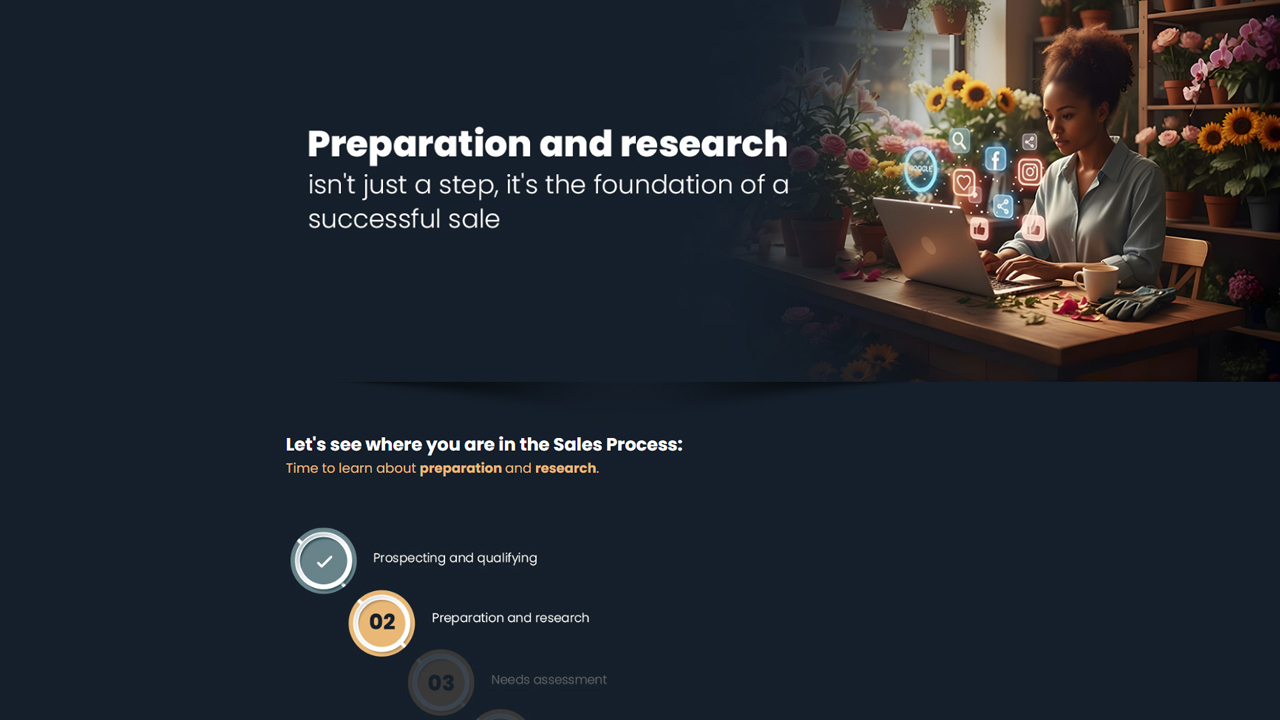
MODULE 2: Preparation and research
- Recognizing the importance of thorough preparation before customer contact
- Understanding how research builds customer trust
- Identifying key information to collect to set clear sales objectives
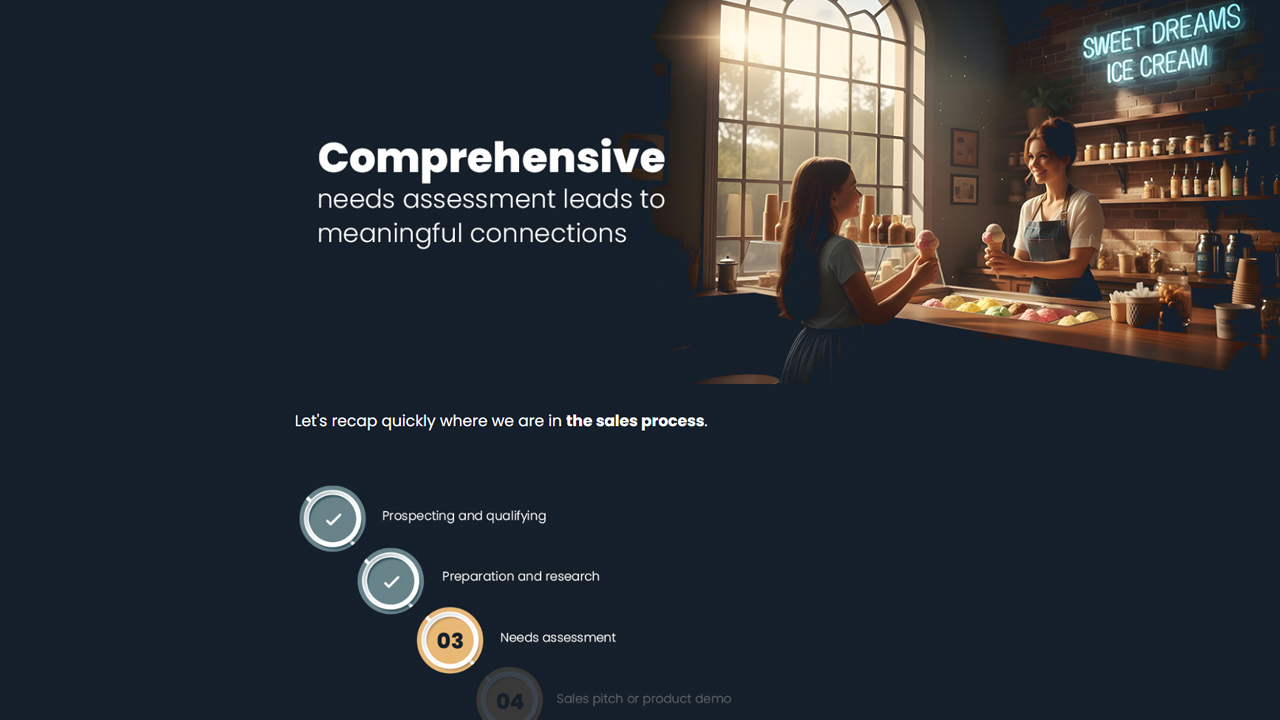
MODULE 3: Conducting a needs assessment
- Understanding the purpose of a needs assessment in creating customer-focused solutions
- Identifying customer needs and converting them into sales opportunities
- Setting clear objectives before conducting a sales call
MODULE 4: The sales pitch or demo
- Developing a concise, customer-focused sales pitch
- Tailoring presentations to meet unique customer needs
- Demonstrating sales expertise through an effective, engaging pitch
MODULE 5: The sales proposal and objection handling
- Recognizing common customer objections and how to respond to them
- Viewing objections as opportunities to strengthen customer relationships
- Matching objection-handling strategies to specific situations
MODULE 6: Closing the sale
- Recognizing that closing is an ongoing part of the sales process
- Identifying verbal and non-verbal buying signals
- Building long-term customer relationships through effective closing techniques
MODULE 7: Follow-up
- Understanding the purpose and importance of post-sale follow-up
- Demonstrating consistent follow-through to maintain customer trust
- Recognizing follow-up as a key stage in long-term relationship management
MODULE 8: How to be a great salesperson
- Identifying the 12 keys to becoming a great salesperson
- Reflecting on areas for personal and professional improvement in your sales approach
MODULE 9: Am I a great salesperson?
- Identifying areas in your sales approach that require improvement
MODULE 1: Chief orientation
- Understanding what a Chief of Calm is by:
- Defining “Chief of Calm”
- Explaining why Chiefs of Calm are important in South Africa
MODULE 2: Knowledge bootcamp
- Describing the job of a Chief of Calm by:
- Explaining grade E security guards
- Identifying the criteria and duties of a Chief of Calm
- Identifying the potential career paths as a Chief of Calm
MODULE 3: Preparing for your duty
- Understanding the qualities and skills of a Chief of Calm by:
- Describing the qualities of a Chief of Calm
- Identifying ways to become a Chief of Calm by:
- Describing steps to follow to apply for a position as a Chief of Calm
- Identifying places to apply for a security guard job
MODULE 4: Your first mission
- Understanding the skills a Chief of Calm should have by:
- Describing the qualities and skills of a Chief of Calm
- Identifying ways to become a Chief of Calm by:
- Identifying tips to secure a security guard job
- Identifying the qualities of a Chief of Calm
MODULE 1: Why do I need a driver’s licence?
- Understanding what the K53 test is by:
- Explaining what the K53 test is and what it measures
- Identifying the benefits of completing your K53 test
- Exploring the possible careers you can try out as a driver
MODULE 2: What is required to get a driver’s licence?
- Understanding the requirements to complete the K53 test
- Explaining what the requirements are to complete the K53 driver’s test
- Identifying the different codes for the K53 driver’s licence and what they entail
MODULE 3: Resources to get you on your way
- Exploring downloadable resources to successfully complete the K53 test
- Tips to apply on the day of writing the K53 test
Digital Marketing
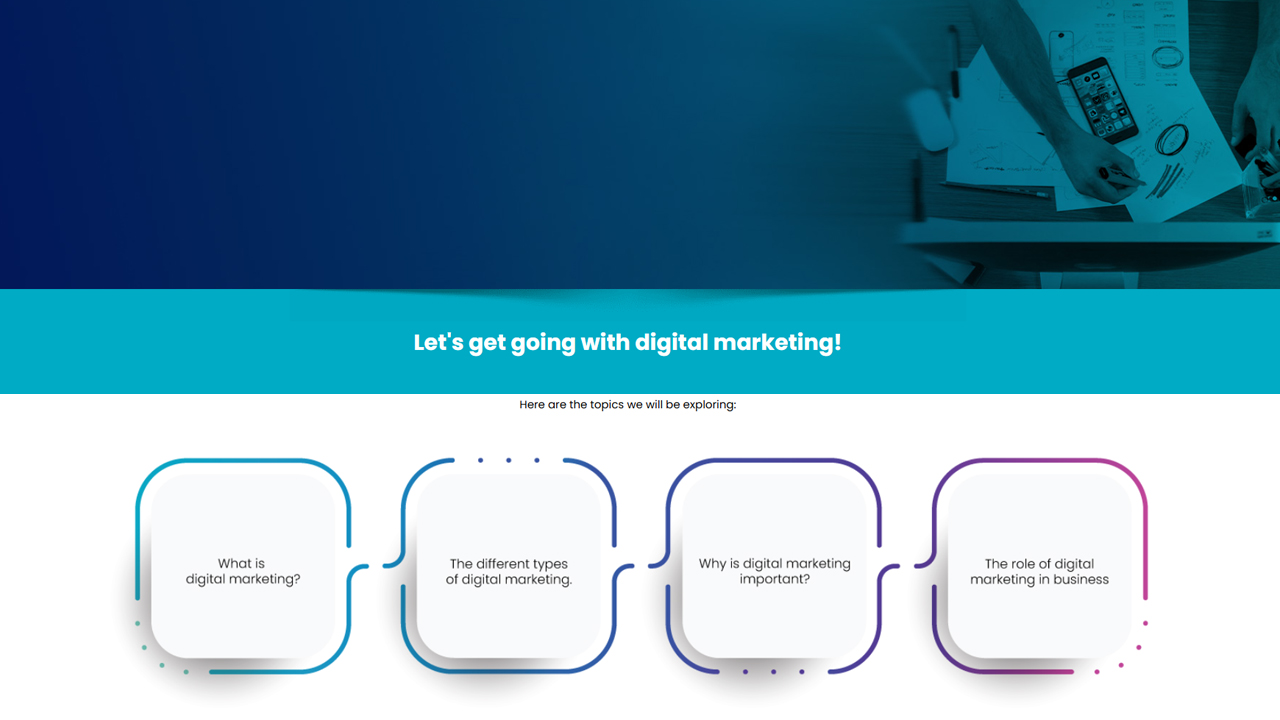
MODULE 1: Introduction to Digital Marketing
- Introduction to digital marketing focuses on:
- Understanding what Digital Marketing is
- Identifying why Digital Marketing is important
MODULE 2: Digital Marketing in a business
- Understand digital marketing for business by:
- Identifying the different types of Digital Marketing
- Examining the role of Digital Marketing in a business
MODULE 1: What is Social Media?
- Learn how to use Social Media as a digital marketing tool by:
- Defining the meaning of Social Media
MODULE 2: Advantages and disadvantages
- Learn how to use Social Media as a digital marketing tool by:
- Identifying the advantages and disadvantages of Social Media
MODULE 1: Why LinkedIn for business
- Harness the power of LinkedIn by:
- Defining what LinkedIn is as a platform
- Examining the reasons to use LinkedIn
MODULE 2: Tips for LinkedIn marketing
- Harness the power of LinkedIn by:
- Investigating tips to use LinkedIn effectively in a marketing context
MODULE 1: Why Facebook for business
- Defining what Facebook is as a platform
- Examining the reasons to use Facebook
MODULE 2: Tips for Facebook marketing
- Learn how to use Facebook for marketing by:
- Investigating tips for effective marketing on Facebook
Risk Management and Governance
- Understanding the difference between corruption and fraud.
- Identifying the dimensions of corruption (corrupt activities).
- Identifying corrupt practices.
- Defining bribery as a transaction.
- Understanding what can be viewed as a bribe.
- Identifying the elements and evidence that constitute bribery.
- Scenario-based learning: Determining the right course of action in a given scenario.
- Understanding the importance of ethics by means of global
scandals. - Defining conflict of interest.
- Determining whether a conflict of interest exists.
- Using decision-making guidelines to avoid conflict of interest.
- Defining a culture of compliance.
- Identifying the eight elements of a good compliance program.
- Examining the elements of a comprehensive ABC compliance program.
- Understanding the definition of risk
- Understanding the elements of risks related to money laundering and terrorist financing
- Applying practical applications to manage money laundering and counter-terrorist financing risks
- Examining financial risk scenarios
- Examining the Risk-Based Approach
- Defining fraud, money laundering, and terrorist financing.
- Examining facts about money laundering and terrorist financing.
- Using examples to explain the three steps in the money laundering process.
- Identifying five key steps to contribute to combating money
laundering and terrorist financing.
- Examining the evidence timeline of major corporate fines
relating to measures, controls, and screening of customers and
3rd parties. - Questioning transaction criteria to identify potentially suspicious
transactions. - Interrogating example scenarios of suspicious customer
behavior / transactions. - Using the four checkpoints for effective reporting of potentially suspicious transactions.
- Applying the three rules to successful reporting and identification
of criminals.
- Understanding the basic principles of KYC.
- Examining what KYC tells you about customers and 3rd parties.
- Reviewing the KYC program steps.
- Identifying the three elements of KYC good practice.
- Reflecting on the KYC process.
- Using the S-A-F-E method as KYC for transactions.
MODULE 1: What is business continuity management?
- Defining business continuity management.
- Explaining the purpose of business continuity management.
- Identifying the benefits of business continuity management.
MODULE 2: How to ensure business continuity
- Creating a business continuity framework.
- Testing the business continuity framework.
- Examining other considerations.
Automotive Series
MODULE 1: Introduction
- Defining who a customer is.
- Understanding what customers expect from a sales executive.
- Analyzing how to influence the 6-step customer buying cycle.
- Using the 8-step process to close the deal.
MODULE 2: Meet and greet
- Analyzing the three deciding factors that customers use to measure a sales executive.
- Understanding how to make a great first impression using personal appearance, approach, and attitude.
MODULE 3: Qualify the customer
- Identifying three steps to successfully qualify a customer.
- Applying different question types to qualify a customer.
- Identifying focus areas to formulate qualifying questions.
MODULE 4: Present the product
- Demonstrating how to present the vehicle to the customer.
- Demonstrating how to do a static and dynamic vehicle presentation.
- Using the 6-point presentation process during the vehicle demonstration.
- Demonstrating the steps to follow before, during, and after a demonstration drive.
MODULE 5: Addressing objections
- Understanding the value of an objection in the sales process.
- Differentiating between an objection and an excuse.
- Identifying the main types of objections.
- Demonstrating two strategies and a 5-step process to address objections.
- Applying techniques to demonstrate value to the customer.
- Identifying the dos and don’ts when handling objections.
MODULE 6: Ask for the deal
- Understanding how to close the deal, ask for the sale, and seal the deal.
- Distinguishing between three different types of deal closers and when to use them.
- Applying the nine-step process to seal a deal
Compliance
MODULE 1: What is risk?
- Understanding why risk management is important and necessary.
- Identifying what risk is.
- Examining the different risk categories.
MODULE 2: What is risk management?
- Identifying what risk management involves.
- Understanding how to make risk management work.
- Examining the benefits of managing risk.
- Adopting a robust risk culture.
MODULE 3: The risk management process: Part 1
- Clarifying risk management goals.
- Identifying key stakeholders involved in risk management.
- Identifying risks in your environment.
MODULE 4: The risk management process: Part 2
- Understanding how to act when a risk is identified.
- Monitoring and reviewing risk management.
- Understanding the communication involved in risk management.
MODULE 1: Aims of the LRA
- Explaining the purpose of the Act.
- Examining what is included and excluded by the Act.
MODULE 2: Key stakeholders in terms of the LRA
- Identifying the key stakeholders in terms of the LRA.
- Identifying the roles of key stakeholders.
MODULE 3: Unfair labor practices and dismissal
- Identifying four types of unfair labor practices.
- Explaining how disputes about unfair labor practices should be handled.
- Exploring the remedies available in cases of unfair labor practice.
- Identifying valid reasons for dismissal.
- Identifying the criteria for fair dismissal procedures.
MODULE 4: Disciplinary and grievance procedures
- Explaining the disciplinary procedure.
- Explaining the grievance procedure.
MODULE 1: Overview of the OHS Act
- Understanding the legal intent of the OHS Act.
- Examining what is included and excluded by the Act.
MODULE 2: Duties in terms of the OHS Act
- Identifying the duties of employers and employees in terms of the Act.
MODULE 3: Duties in terms of the OHS Act
- Examining the duties of inspectors, representatives, and
committees in terms of the Act.
MODULE 4: OHS workplace procedures: Disciplinary and grievance procedures
- Reviewing accident and emergency responses.
- Explaining investigation requirements in terms of the Act.
MODULE 1: The core of the workplace ethics
- Understanding what workplace ethics are.
- Examining the basis of workplace ethics – our collective values
and beliefs.
MODULE 2: Ethical workplace behavior
- Identifying the questions one can ask to test the ethics of a decision.
- Reviewing how ethics apply to relationships inside and outside
the workplace.
MODULE 3: The dark side of workplace ethics
- Testing your understanding of ethical and unethical behavior through practical scenarios.
MODULE 1: Overview of the PoPIA Act
- Identifying what the PoPI Act is.
- Understanding how the Act is applied.
- Reviewing the aims of the Act.
- Identifying five key definitions contained in the Act.
- Understanding what ‘integrity of information’ means.
MODULE 2: Classification of 'Personal Information' under the Act
- Identifying examples of personal information.
- Understanding personal rights under the Act.
- Examining how personal information should be handled to manage risk.
MODULE 3: Implementation of the Act
Examining how the PoPI Act is implemented pertaining to:
- The duties of the Information Regulator.
- Your rights in terms of direct marketing.
- How to lodge a complaint.
- The penalties applicable for non-compliance to the PoPI Act.
MODULE 1: Who, What, and Why?
- Describing the nature of the PoPIA.
- Distinguishing between the responsibilities of different role-players.
- Describing the role of the information officer.
- Demonstrating awareness of the relationship between the PoPIA and other South African information protection laws.
MODULE 2: Ethical workplace behavior
Examining and applying the eight general processing conditions, including:
- accountability,
- processing limitations,
- purpose specification,
- further processing,
- information quality,
- openness,
- security safeguards, and
- vvv subject participation.
MODULE 3: The dark side of workplace ethics
- Describing the processing strategies relevant to the following:
- Processing of special information.
- Use of personal information for direct marketing purposes.
- The transborder transfer of personal information.
- Processing of personal information for employment purposes.
- Describing the relationship between the PoPIA and GDPR.
- Describing the consequences of PoPIA non-compliance.
MODULE 1: Introduction to FAIS
- Identifying the rationale for FAIS legislation.
- Understanding the purpose of FAIS.
- Examining the problems of different legislation that applies to
different industry sectors. - Identifying how FAIS addresses these problems.
MODULE 2: Terminology used in legislation
- Explaining different terms and concepts used in legislation in the correct context.
MODULE 3: Consumer protection
- Identifying how legislation protects consumers.
- Identifying the measures that protect consumers.
- Identifying the role-players involved in consumer protection.
MODULE 4: FAIS licensing processes and requirements
- Identifying the steps in the authorization process for a company to conduct advisory and intermediary service activities.
- Understanding Fit-and-Proper requirements.
MODULE 5: Requirements for licensing by FAIS for different roles
- Identifying the requirements for three different career paths, namely:
- Key Individuals
- The Compliance Officer
- The Representative.
MODULE 1: About cybersecurity
- Define cybersecurity and cybercrimes.
- Describe the history of cybercrimes.
- Identify modern trends in cybercrime.
- Analyse the importance of cybersecurity.
MODULE 2: Cybersecurity for businesses
- Identify role-players.
- Describe cybersecurity models.
- Analyse the need for cyberculture within a business.
MODULE 3: Cybersecurity for individuals
- Define social engineering.
- Identify social engineering attacks.
- Respond to social engineering threats and attacks.
MODULE 1: Overview of the National Credit Act
- Describing the purpose of the National Credit Act
- Describing its relevance to consumers and financial institutions
MODULE 2: Credit providers, agreements and consumers
- Analyzing legislation pertaining to the marketing practices of credit providers
- Explaining the dos and don’ts of credit agreements
- Describing the rights of consumers
MODULE 3: The regulators
- Describing the function of credit bureaus
- Describing the roles and responsibilities of the National Credit Regulator and the National Credit Tribunal
- Identifying how to manage disputes and complaints
MODULE 1: Overview of the POPI Act
- dentifying what POPIA is
- Understanding how the Act is applied
- Reviewing the aims of the Act
- Identifying five key definitions contained in the Act
- Understanding what “integrity of information” means
MODULE 2: Classification of “personal information” under the Act
- dentifying examples of personal information
- Understanding personal rights under the Act
- Examining how personal information should be handled to manage risk
MODULE 3: Implementation of the Act
- Examining how POPIA is implemented pertaining to:
- The duties of the Information Regulator
- Your rights in terms of direct marketing
- How to lodge a complaint
- The penalties applicable for non-compliance with POPIA
MODULE 1: Role-player rights
- Identifying the duties of employers and employees in terms of the Act.
MODULE 2: Guidelines for working hours
- Examining the guidelines pertaining to working hours, including ordinary hours, overtime, meal intervals, rest periods, public holidays, night work, and Sunday work.
MODULE 3: Guidelines for leave
- Explaining employee leave as it applies to annual leave, sick leave, maternity leave, and family responsibility leave.
MODULE 4: Guidelines for remuneration (pay)
- Identifying the employer information to be provided to an employee.
- Reviewing guidelines for employee records.
- Identifying information to be included on a pay slip or salary advice.
- Explaining regulations about salary deductions.
MODULE 1: Overview of EE Act
- Understanding the purpose of the EE Act.
- Examining the guidelines for implementation of the Act in the workplace.
MODULE 2: Unfair discrimination
- Defining unfair discrimination in the workplace.
- Exploring guidelines and requirements to avoid unfair discrimination.
MODULE 3: Affirmative action
- Defining affirmative action.
- Identifying key concepts associated with affirmative action.
- Reviewing employment policy requirements regarding affirmative action.
MODULE 4: Implementation of affirmative action
- Explaining compliance in the context of affirmative action.
- Defining the Employment Equity Plan and the Employment Equity Report.
- Reviewing the enforcement of employment equity in the workplace.
MODULE 1: Overview of the PFMA
- Examining the background information to the Act.
- Understanding the purpose and objectives of the Act.
- Reviewing the PMFA in relation to the South African Constitution.
MODULE 2: The chapters of the PFMA
- Creating awareness of the scope of the PFMA.
MODULE 3: Policies contained in the Act
Examining the policies contained in the Act pertaining to:
- Departments and Public Entities.
- National Treasury.
- Provincial Treasuries.
- Loans, guarantees, and other commitments.
- Accounting officers and financial statements.
- Offenses.
MODULE 1: Overview of workplace professionalism
- Understanding what workplace professionalism means.
- Examining professional behaviors in a work context.
MODULE 2: Professional relationships
- Examining professional relationships inside and outside the workplace.
MODULE 3: Professional work ethic
- Exploring boundaries and work ethic in your work environment.
MODULE 1: Introduction to TCF
- Identifying what TCF means.
- Examining why TCF exists.
- Understanding why TCF is important right now.
MODULE 2: TCF in practice
- Understanding the fairness outcomes underlying TCF.
- Identifying how the six fairness outcomes can be achieved in daily business practices.
MODULE 3: What will TCF do for the financial services customers?
- Understanding different levels of customer protection and how they work.
- Distinguishing between ‘suitability’ and ‘best interest’ when meeting the needs of the customer.
MODULE 4: Making TCF a part of your business DNA
- Understanding how to embed TCF in the day-to-day activities of your business.
MODULE 1: Anti-money laundering and counter-terrorist financing (AML and CTF)
- Defining fraud, money laundering, and terrorist financing.
- Examining facts about money laundering and terrorist financing.
- Using examples to explain the three steps in the money laundering process.
- Identifying five key steps to contribute to combating money laundering and terrorist financing.
MODULE 2: AML/CTF Suspicious transactions
- Examining the evidence timeline of major corporate fines relating to measures, controls, and screening of customers and 3rd parties.
- Questioning transaction criteria to identify potentially suspicious transactions.
- Interrogating example scenarios of suspicious customer
behavior / transactions. - Using the four checkpoints for effective reporting of potentially suspicious transactions.
- Applying the three rules to successful reporting and identification
of criminals.
MODULE 3: What will TCF do for the financial services customers?
- Understanding different levels of customer protection and how they work.
- Distinguishing between ‘suitability’ and ‘best interest’ when meeting the needs of the customer.
MODULE 4: Making TCF a part of your business DNA
- Understanding how to embed TCF in the day-to-day activities of your business.
MODULE 1: Principles of first aid
- Understanding the purpose of first aid, the safety of the aider, and what the law says about first aid
MODULE 2: It’s all about preparedness
- Managing first aid equipment.
MODULE 3: Scene and casualty management
- Assessing the accident scene and managing individual injuries.
MODULE 1: Who, what, and why?
- Describing the nature of POPIA
- Distinguishing between the responsibilities of different role-players
- Describing the role of the information officer
- Demonstrating awareness of the relationship between POPIA and other South African information protection laws
MODULE 2: How: General processing strategies
- Examining and applying the eight general processing conditions, including:
- Accountability
- Processing limitations
- Purpose specification
- Further processing
- Information quality
- Openness
- Security safeguards
- Data subject participation
MODULE 3: How: Specific processing strategies
- Describing the processing strategies relevant to the following:
- Processing of special information
- Use of personal information for direct marketing purposes
- The transborder transfer of personal information
- Processing of personal information for employment purposes
- Describing the relationship between POPIA and GDPR
- Describing the consequences of POPIA non-compliance
MODULE 1: Introduction to the two-pot retirement system
- Exploring what the two-pot system is and the reasons behind its implementation
MODULE 2: The function of the two-pot retirement system
- Understanding how the two-pot system works and how it will affect retirement funds
MODULE 3: The pros and cons of the two-pot retirement system
- Examining the advantages and disadvantages tied to the two-pot system
This innovative e-learning programme aims to assess and enhance cybersecurity knowledge through an engaging and interactive experience.
You will get immersed in a captivating fictional story where you will assume the role of an undercover IT agent on a mission to acquire their "Data Shield".
This game assesses your knowledge in the following areas:
- Password management
- Online and offline personal information security
- Cyber threat identification
- Social engineering
- Response to urgency tactics
- Response to common cyberattacks
Wellness
MODULE 1: Overview of HIV-AIDS
- Identifying what HIV-AIDS means.
- Understanding how HIV-AIDS is contracted.
- Identifying the different stages of HIV-AIDS.
- Understanding how HIV testing works.
MODULE 2: Presentation of HIV-AIDS
- Listing the different ways to prevent HIV-AIDS transmission in four areas, including:
- Sexual contact.
- Mother-to-child.
- Injecting equipment.
- Blood transfusion and organ or tissue transplantation.
MODULE 3: Living with HIV-AIDS
- Identifying ways to stay healthy and productive when living with HIV, including:
- Taking medication.
- Exercising regularly.
- Dieting in a balanced way.
- Consulting with a health professional.
- Building a support system with the help of family and friends.
MODULE 4: Overview of sexually transmitted diseases (STDs)
- Defining what an STD is.
- Identifying the different types of STDs.
- Identifying different ways to practice safe sex to minimize the risk of infection.
MODULE 1: Fundamentals of financial wellness
- Defining financial wellness versus a crisis.
- Describing financial freedom.
- Assessing your current financial status.
MODULE 2: The psychology of money
- Identifying the four elements of money psychology.
- Assessing your money psychology.
- Examining ways to develop a productive relationship with money.
MODULE 3: Money habits
- Defining productive and unproductive money habits.
- Evaluating how you manage your personal finances.
- Identifying ways to improve how you manage your personal
finances.
MODULE 4: Ways to manage our money well
- Examining five steps to effectively manage your money, including:
- Budgeting
- Spending
- Borrowing
- Saving
- Planning
MODULE 1: It’s all connected – mental health is mental wealth
- Defining mental health and “Mental Wealth”
- Identifying factors that can affect mental health
MODULE 2: Checking your mind’s bank balance
- Assessing your current outlook on mental health
- Understanding why mental health is important
MODULE 3: Becoming a mental millionaire
- Understanding why it’s important to take emotional responsibility
- Identifying ways to improve general well-being and mental well-being
MODULE 1: Overview of trauma and post-traumatic stress
- Defining trauma and post-traumatic stress.
- Identifying the sources of trauma and post-traumatic stress.
- Examining the impact of trauma and post-traumatic stress.
MODULE 2: Development stages of trauma and post-traumatic stress
- Identifying the stages of trauma and post-traumatic stress.
- Explaining the signs and symptoms of trauma and posttraumatic stress.
MODULE 3: The healing process
- Examining the role of “locus of control” in dealing with trauma and post-traumatic stress.
- Exploring tips and tools to recover from trauma and posttraumatic stress.
MODULE 4: Helping other with trauma
- Using a three-step approach to help people at the point of trauma.
- Identifying ways to support others healing from trauma.
MODULE 1: What is workplace change
- Defining workplace change
- Describing why people fear workplace change
MODULE 2: The emotional stages of change
- Identifying five emotional stages of workplace change:
- Shock and denial
- Anger and frustration
- Bargaining and negotiation
- Sadness and detachment
- Acceptance and moving forward
MODULE 3: Strategies to accept workplace change
- Identifying four strategies to accept workplace change
- Identify when to use which strategy
Performance
MODULE 1: What is attitude?
- Identifying the three components of attitude.
- Examining the impact of attitude using positive and negative
examples.
MODULE 2: Determine your attitude status
- Identifying your personal attitude status.
- Identifying focus areas for improvement.
- Linking attitude to your life success.
MODULE 3: The impact of attitude
- Discovering how attitude impacts team dynamics and success.
- Examining tips and tools to cultivate a positive team attitude.
MODULE 4: Baking lessons
- Analyzing the components of a winning workplace attitude.
- Discovering five easy steps to change your attitude.
MODULE 1: Understanding awareness
- Defining what awareness means.
- Differentiating between awareness, attention, and mindfulness.
MODULE 2: Identifying different types of awareness
- Distinguishing between self-awareness, social awareness of
time, and awareness of tasks and results.
MODULE 3: The importance of awareness
- Understanding how important awareness is in your life and your relationships.
- Identifying the impact of awareness on productivity.
- Identifying the value of environmental awareness in your life.
- Recognizing the benefits of awareness.
MODULE 4: Developing awareness
- Recognizing your current level of awareness through self-assessment.
- Discovering ways to continuously develop your level of awareness using six steps.
MODULE 1: What does impact mean to you?
- Understanding the value and importance of making an impact.
- Identifying your impact on the people in your life.
MODULE 2: Strategies for a powerful impact
- Examining how to make a powerful positive impact on the people or situations in your life.
- Discovering practical strategies to apply to create a more
powerful, positive impact.
MODULE 3: Impact through productivity
- Understanding what productivity really means.
- Examining the impact of productivity or lack thereof on your team.
- Discovering practical tips to make a great impact on your team through productivity
MODULE 1: What does enthusiasm mean?
- Understanding what it means to have enthusiasm.
MODULE 2: Why is enthusiasm a choice?
- Discovering why enthusiasm is a choice and not a feeling.
MODULE 3: How does enthusiasm impact my work-life balance?
- Identifying the impact of enthusiasm on your personal life, your team, and your organization.
MODULE 4: How to develop an enthusiastic mindset
- Identifying the myths and facts about enthusiasm.
- Discovering six ways to build enthusiasm.
- Applying strategies to develop an enthusiastic mindset.
MODULE 1: What is self-discipline?
- Understanding what self-discipline means.
- Examining the five benefits of self-discipline.
MODULE 2: Why is self-discipline such a great characteristic?
- Identifying the characteristics of self-discipline.
- Determining if you have the characteristics of self-discipline.
MODULE 3: The impact of self-discipline on my life and my team
- Exploring the boundaries of self-discipline in your life and work environment.
MODULE 4: Cultivating self-discipline
- Exploring tips and tools to help you develop self-discipline.
- Applying the principles of self-discipline to help reach your goals.
Leadership
MODULE 1: The relevance of managers and leaders in the future world of work
- Understanding the difference between corruption and fraud.
- Identifying the dimensions of corruption (corrupt activities).
- Identifying corrupt practices.
MODULE 2: Building the case for the manager-leader combo
Identifying why future fit means managing-leading in combination by investigating:
- The 14 principles of the future organization.
- The characteristics of future workplaces.
- What future employees will (be) like.
MODULE 3: The nine skills requirements of next-gen manager-leaders
Acquiring knowledge that will enhance your performance as a manager-leader by covering:
- Technology management
- Out-centric leadership
- Emotional intelligence
- ROWE focus
- Tension-tolerant collaboration
- Feedback
- Handling uncertainty
- Constant learning
- Big picture thinking
MODULE 4: Are you a good manager-leader
- Acquiring lessons in manager-leader excellence through selfreflection and feedback.
- Acquiring four quick tips for becoming a better manager-leader.
HR
MODULE 1: Disputes in the workplace
- Identifying the difference between conflict and a dispute:
- Defining conflict in the workplace.
- Defining a workplace dispute.
- Distinguishing between conflicts and disputes in the workplace.
- Identifying the reasons for workplace disputes.
- When is it the employee’s fault?
- When is it the employer’s fault?
MODULE 2: How to resolve disputes
- Defining the process of alternative dispute resolution (ADR).
- Explaining how disputes are resolved through ADR.
- Distinguishing between a private dispute resolution versus a statutory dispute resolution:
- What is private dispute resolution
- What is statutory dispute resolution
- Explaining how the ADR forums resolve disputes.
- Defining Arbitration, Mediation, and Conciliation.
MODULE 3: Understand what Arbitration is
- Differentiating between arbitration and litigation.
- Identifying when to use which process.
- Determining how to agree to arbitration.
MODULE 4: Who takes part?
- Identifying the role-players in arbitration, including:
- The Arbitrator.
- The Employer.
- The Employee/s.
- Explaining the roles and responsibilities of these parties during the arbitration.
MODULE 5: How does it work?
- Preparing for what happens before arbitration:
- Preparation.
- Representation.
- Pre-arbitration meeting.
- Preparing for what happens during arbitration:
- Introduction.
- Preliminary issues.
- Narrowing issues.
- Hearing the evidence.
- Closing arguments.
- Preparing for what happens after arbitration:
- The arbitration award.
MODULE 6: What is the CCMA?
- Explaining the role and purpose of the CCMA.
- Explaining how the CCMA helps you to resolve workplace disputes.
MODULE 7: Arbitration tips
- Identifying tips to use during the arbitration process, including:
- The opening statement.
- Presenting your evidence.
- Cross-examination.
- Closing statements.
MODULE 8: Now it's your turn!
- Applying your knowledge of the arbitration process to scenariobased questions.
MODULE 1: Stakeholders, role and responsibilities
- Recognizing the different stakeholders and explaining their roles
- Discussing the roles and responsibilities of trade unions and shop stewards as stakeholders
MODULE 2: The context of the organization
- Identifying various types of employment agreement
- Identifying, describing, and explaining relevant conditions of employment in an organization
MODULE 3: Trade unions and their role in the South African legal framework
- Explaining trade unions and how they operate in the legal framework
MODULE 4: Policies and procedures applicable to employee relationships
- Identifying relevant policies and procedures that apply to employment relationships.
MODULE 5: Grievance procedures and collective bargaining
- Explaining process, roles and responsibilities during a grievance procedure
- Describing the shop steward’s inputs during a grievance procedure
- Describing the nature of collective bargaining
MODULE 6: Disciplinary hearings
- Explaining process, roles and responsibilities of stakeholders during a disciplinary hearing
- Describing the inputs provided by a shop steward during a disciplinary hearing procedure
MODULE 7: Workplace disputesI
- Identifying workplace disputes and the process associated with them
- Managing a strike after declaring a dispute with the employer
MODULE 1: Introduction to training and development
- Understanding the need for a skilled and knowledgeable workforce
- Exploring why effective training and development initiatives are essential for business success
MODULE 2: The context of the organization
- Discovering the relationship between focused training and business success
- Understanding the significance in measuring the effectiveness of training programs
MODULE 3: The long-term value of training and development
- Examining how training and development address long-term skill needs and contribute to future business goals
ICT Skills
MODULE 1: Navigation
- Learning how to find your way around documents and websites using a computer.
MODULE 2: The mouse
- Learning how to use the mouse to increase the efficiency of your
work on a computer.
MODULE 3: The keyboard
- Identifying and using the different functionalities of a standard computer keyboard.
MODULE 4: The desktop
- Learning how to find your way around and use the computer
desktop's basic functions, which include:- The taskbar
- The start icon
- The control panel
- Checking network connectivity
- Using file explorer
- Internet browsers
MODULE 1: Introducing AI
- Exploring what artificial intelligence is and how it works
- Identifying the core characteristics that define AI
- Recognizing key elements that make AI systems intelligent
MODULE 2: Evolution of AI
- Tracing the major milestones in AI’s historical development
- Evaluating how AI has evolved to shape modern society
- Assessing both the positive and negative effects of AI in everyday life
MODULE 3: AI in everyday life
- Discovering how virtual assistants and recommendation systems operate
- Identifying common examples of AI tools used daily
- Exploring how image recognition functions and supports real-world applications
MODULE 4: The future of AI
- Examining upcoming trends and breakthroughs in AI technology
- Understanding how AI-assisted decision-making influences business and society
- Analyzing the benefits and challenges of human–AI collaboration
- Evaluating how AI is transforming industries such as healthcare, finance, and education
MODULE 1: Introduction to ChatGPT
- Exploring what ChatGPT is and how it functions
- Understanding the key characteristics that make ChatGPT unique
- Describing how ChatGPT generates responses using prompts and context
MODULE 2: The basics of ChatGPT
- Identifying the main interface elements, including text boxes, buttons, and chat history
- Recognizing editing, regeneration, and feedback tools in ChatGPT
- Structuring clear and effective prompts for better responses
- Applying ChatGPT’s basic features to start, edit, and refine conversations
MODULE 3: ChatGPT in business
- Exploring how ChatGPT drives efficiency, innovation, and customer satisfaction
- Weighing the advantages and limitations of ChatGPT across business functions
- Evaluating ChatGPT’s impact in marketing, sales, and customer service
MODULE 4: ChatGPT in customer service
- Understanding how ChatGPT enhances response time and personalization
- Assessing the strengths and weaknesses of using ChatGPT for customer engagement
MODULE 5: ChatGPT and personal growth
- Using ChatGPT as a tool for self-improvement and lifelong learning
- Leveraging ChatGPT for goal setting, productivity, and reflection
- Exploring how ChatGPT supports personalized learning and education
MODULE 1: About Inbox Zero
- Defining inbox management by:
- Understanding the importance of inbox management.
- Identifying the advantages and disadvantages of inbox management.
- Describing the nature of Inbox Zero strategies by:
- Understanding what Inbox Zero means.
- Identifying the benefits of Inbox Zero.
MODULE 2: Hitting the target: applying the rules
- Describing the benefits of organizing your inbox.
- Identifying how to organize your inbox by applying the following rules:
- Create labels.
- Create folders.
- Apply filters.
- Delete emails.
MODULE 3: Level up: Follow processes
- Describing inbox management best practices:
- Establishing the link between inbox management rules and processes.
- Identifying best practices for reading and responding to
emails.
- Applying processes relating to inbox management:
- Emailing the 5 Ds of Inbox Zero.
- Applying effective time management.
MODULE 1: Introduction
- Recognizing the complex challenges surrounding AI development and use
- Evaluating the implications of bias, ethics, and privacy in AI systems
- Understanding how ethical, social, and technical factors intertwine in AI decision-making
MODULE 2: Responsible use of AI
- Identifying common types and sources of bias in AI
- Applying proactive strategies to reduce and manage bias in AI systems
- Recognizing ethical practices in responsible AI development and implementation
- Identifying privacy challenges such as data persistence, repurposing, and spillovers
- Applying best practices to protect user data and respect digital privacy
MODULE 3: Limitations and challenges
- Identifying the technical and functional limitations of AI tools
- Recognizing the concerns and hesitations that influence AI adoption
- Evaluating the benefits of responsible AI integration in business and personal contexts
MODULE 1: Introduction
- Recognizing the complementary strengths of humans and AI
- Identifying AI as a valuable productivity tool rather than a threat
- Understanding how collaboration between humans and AI drives performance and innovation
MODULE 2: Responsible use of AI
- Distinguishing between AI augmentation and AI replacement
- Applying AI augmentation to enhance creativity, efficiency, and innovation
- Recognizing how AI supports problem-solving and decision-making
- Identifying practical ways to integrate AI tools in creative and analytical processes
MODULE 3: Limitations and challenges
- Understanding how AI reshapes workforce management and task optimization
- Applying AI tools to support employee well-being and stress management
- Identifying AI-driven strategies for achieving work-life balance
- Recognizing AI’s role in creating efficient, balanced, and people-centered workplaces
MODULE 4: Fostering a culture of innovation and adaptability
- Recognizing AI as a driver of creative problem-solving and continuous improvement
- Applying AI to generate, evaluate, and implement new ideas
- Embracing lifelong learning and adaptability in the age of AI
- Identifying strategies to cultivate innovation and resilience in AI-driven environments
Job Readiness
Introduction – why all the fuss?
- Understanding the importance of English in the workplace
- Showcasing your understanding of English text and practical application thereof
Screening assessment
- Reading a comprehension text:
- Explaining events and answers to the text
- Demonstrating basic language skills:
- Correcting mistakes in texts
- Understanding tenses
- Identifying parts of speech
- Identifying singular and plural forms
Project Managment
- Understanding scope management and the five steps in scope management
- Analyzing stakeholder needs and applying systematic collection methods
- Creating project scope documentation with standard components
- Constructing a work breakdown structure hierarchically to organize deliverables
- Evaluating project constraints to design balanced scope strategies
- Managing and controlling scope creep effectively
- Understanding project scheduling and its benefits
- Applying systematic steps to develop project schedules
- Evaluating project scheduling techniques and selecting the right one
- Defining deliverables and activities from project requirements
- Estimating time accurately using four proven techniques
- Identifying and documenting task dependencies in project schedules
- Understanding project management and its three core characteristics
- Examining the role and responsibilities of a project manager
- Boosting team effectiveness through proven strategies
- Identifying the four phases of project management
- Writing a structured business case for project approval
- Closing a project using standard closure procedures
- Understanding project management frameworks and why they matter
- Exploring Waterfall, Agile, and Lean frameworks in detail
- Applying Critical Path and Critical Chain scheduling strategies
- Navigating Agile practices like Scrum and Kanban to boost productivity
- Matching frameworks to project requirements for successful delivery
MODULE 1: The nature of stakeholder management
- Defining stakeholder management
- Describing the importance of stakeholder management in personal, team, and organizational contexts
MODULE 2: Using the RACI model
- Defining RACI
- Describing the components of RACI (Responsible, Accountable, Consulted, Informed)
MODULE 3: Applying the RACI model
- Building a RACI matrix for a project, task, or event, aligning roles to responsibilities clearly
- Evaluating scenarios where a RACI chart adds value versus situations where it is unnecessary
Customer service
MODULE 1: How I present myself
- Applying dress etiquette that supports professionalism and aligns with company culture
- Recognize how personal appearance influences customer perceptions of the brand
MODULE 2: How I behave
- Demonstrating professional behavior that builds positive impressions with customers
- Applying customer care practices that show respect, empathy, and accountability
MODULE 3: How I communicate
- Identifying the four key elements of effective customer communication
- Adapting communication styles to different customer contexts and channels
MODULE 4: How I improve
- Practice openness and responsiveness when receiving feedback from customers or managers
- Integrate feedback into actions that improve personal performance and customer experience
MODULE 1: Why customers get upset
- Listing five common reasons customers complain
- Describing how emotions drive behavior
- Reflecting on personal experiences with upset customers
MODULE 2: How to give an effective apology
- Applying four strategies to stay grounded
- Practicing active listening
- Using sincere apology phrases
- Distinguishing between explanations and excuses
- Expressing empathy in two ways.
MODULE 3: How to make things right with a customer
- Reassuring the customer with empathetic phrases
- Asking questions to uncover their desired outcome
- Suggesting workable solutions and alternatives
- Recognizing when to offer compensation
- Summarizing and closing effectively
MODULE 4: How to respond to an abusive customer
- Distinguishing between anger and abuse
- Identifying three signs of abuse
- Applying safe responses
- Practicing in real-world scenarios
Welcome to Power Skills.
In Josh Bersin's words...
"
Soft skills are hard - they are difficult to build, critical, and take extreme effort to obtain.
"
Power skills are those skills that give you real 'POWER' at work.
The POWER skills series provides unique insights into a topic in a rapid way. 10 minutes and you’re done.
True to its name, the power is yours to select the content you want to read or watch. Test your understanding with a few practical questions and off you go to practice in real life.
Power Skills is delivered on two levels:
- Foundational: Teach me.
- Advanced: Challenge me.
POWER Skills
Establishing the basics of effective communication
Discovering tips to master effective communication by:
- Exploring effective communication from a leadership perspective.
- Communicating with intent.
- Applying the "Results first" approach to all communication
messages.
Establishing the basics of effective communication
- Discovering tips to master effective communication by:
- Exploring effective communication from a leadership perspective.
- Communicating with intent.
- Applying the "Result's first" approach to all communication
messages.
Using emotional intelligence to improve your communication
- Discovering different ways to boost emotional intelligence.
- Understanding the link between emotional intelligence and leadership in the context of communication.
Using self-awareness to improve the effectiveness of your communication
- Becoming self-aware by asking the right questions.
- Discovering how self-awareness enhances your journey to
self-improvement.
Using active listening as a sales power tool
- Discovering the art of effective listening to identify a customer's
need and pain points.
Asking the right questions
- Exploring different types of sales questions to create a natural flow in the sales conversation and derive maximum meaning.
Understanding grit as a characteristic of super-successful salespeople
Developing a mindset to succeed by understanding:
- How to develop personal resilience.
- How to interpret passion and perseverance.
- How to create a positive mindset through framing situations, failures, and successes.
Perfecting the art of persuasion
Understanding how to use persuasion as a sales tool to demonstrate
value to a potential customer by:
- Applying a personalized touch to sales conversations.
- Applying persuasion techniques when closing the deal.
The role of context in cultural intelligence
- Discovering the importance of cultural context in effective
communication.
Making sense of behavior by understanding the context of the person or situation. - Identifying how to learn about other cultures.
Building your knowledge of cultural practices and norms
- Discovering the influence of cultural norms and practices in the context of people's behavior and performance.
The adaptable workplace
- Discovering the benefits of cultural adaptability in the workplace.
- Exploring ways to encourage cultural adaptability amongst
employees.
Making the change towards adaptability
- Understanding why adaptability has become a future skill for citizens of a global economy.
- Identifying ways to measure your own cultural adaptability.
Understanding the danger of indecisiveness
- Understanding the impact and potential consequences of
indecisiveness and procrastination when making important decisions. - Discovering easier and more effective ways to make decisions.
Exploring the unintended consequences of decisions
- Discovering the meaning of unintended consequences.
- Identifying the root causes of unintended consequences and how to address these causes.
Understanding complex decisions
- Defining a complex decision and strategies to approach these decisions.
- Applying simple techniques to make decision-making easier and more effective.
The role of intuition in decision-making
- Discovering the role of “gut feel” in decision-making and knowing when to trust your gut.
Understanding what ethical decision-making requires
- Understanding the importance of using ethics as a baseline for decision-making.
- Identifying the factors that influence ethical decision-making.
- Discovering how to create an ethical workplace culture.
The importance of curiosity
- What is curiosity?
- The importance of curiosity.
Challenges associated with curiosity
- How to battle personal ignorance.
How to nurture curiosity
- Practical tips on how to nurture curiosity.
We don't know everything
- How to be uncomfortable with the unknown.
The when, where, and how of learning
- How to battle personal ignorance.
How to nurture curiosity
- How to retain and integrate new information.
Creating your own learning path
- Becoming part of a community of practice.
- Finding your passion.
- Finding a coach.
- Embracing continuous learning.
Intrapersonal factors and negotiations
- Negotiating with oneself.
- Myths about women and negotiations.
- How to use emotions during negotiations.
- The perception of power in negotiations.
Intrapersonal factors and negotiations
- How to negotiate with millennials.
- Basic principles of negotiations.
- Using the element of 'surprise' in negotiations.
Challenges and negotiations
- Conflict and negotiations.
- Virtual negotiations.
- Culture and negotiations.
Welcome to Delta Skills
McKinsey’s research identified a series of Delta skills that we, as global citizens, will need to succeed in the future world and workplace.
- Critical thinking.
- Planning and ways of working.
- Communication.
- Mental flexibility.
- Mobilizing systems.
- Developing relationships.
- Teamwork effectiveness.
- Self-awareness and self-management.
- Entrepreneurship.
- Goals achievement.
- Digital fluency and citizenship.
- Software use and development.
- Understanding digital systems.
Delta skills provide great insights into unique and relevant topics that you wouldn’t find in just any generic content library.
DELTA Skills
What is remote work?
- Identifying different work environments.
- The nature of working remotely.
When is remote work a good fit?
- Benefits and challenge of remote work for employees.
- Assessing a business and individual's eligibility to work remotely.
Setup for remote work success!
Practical tips for employees on organizing their remote work environment:
- Curating your physical work environment.
- Technology setup.
Roles and responsibilities of remote workers
- What to expect from remote working employees.
It's a challenge!
- Identifying and overcoming the challenges of remote work.
Use effective communication strategies
- The importance of communication in remote working.
- Mastering asynchronous communication.
- Communicating clearly, frequently, transparently, and consistently.
- Practical tips for meetings and collaboration.
Manage and monitor output
- How to set standards, monitor, and manage remote teams.
Work plans! The answer to an effective day
A successful workplan enables daily goal achievement while remaining adaptable to a rapidly changing environment. Learn how
to build a great workplan by:
- Defining a workplan and its benefits.
- Unpacking the elements of a workplan.
- Using a technology to develop a workplan.
- Discovering tips to be adaptable and flexible around your workplan.
Getting stuff done: Time versus attention
Putting a different spin on time management:
- Looking at time management from an attention point of view.
- Practical tips on managing your time and achieving your goals.
Becoming an agile thinker
The role of agile thinking in planning and how you work:
- Busting mythes about agile thinking.
- Defining the agile thinker's characteristics.
- Tips to develop agile thinking.
Getting to grips with what mental flexibility means
- What characteristics define a mentally flexibility person?
- Watershed: Mentally flexible versus mentally rigid.
Impact! How can mental flexibility change you and your
relationships.
- Discovering the benefits of mental flexibility for yourself and your relationships.
What's stopping you?
- Identifying personal and environmental barriers to becoming
mentally flexible.
Snapshot: Am I mentally flexible?
- Assessing your current level of mental flexibility.
Getting on track: Improving my mental flexibility
- Identifying practical ways to improve mental flexibility in yourself and your team.
Decoding digital citizenship
- What is digital citizenship?
- Good versus bad digital citizenship.
- The good digital citizenship handbook.
Respecting yourself and others
- Law: We need law and order in life and tech.
- Access: Everyone must engage.
- Netiquette: Mind your tech manners.
Educating yourself and others
- Digital literacy: Digital skills are not enough.
- Communication: Use the right tool at the right time and in the right way.
- Privacy: The privacy and the internet oxymoron!
The nature of systems thinking
- Define what “systems thinking” is
- Describe the benefits of systems thinking
- Explain how systems thinking works
The link between systems thinking and the value chain
- Define the value chain
- Differentiate systems thinking from value chain thinking
- Explain how both complement each other
Applying systems thinking at work
- Reviewing workplace scenarios using systems thinking
Decoding fluency
Decoding fluency covers the following topics:
- The evolution of digital fluency.
- Components of digital fluency.
- The four digital personas.
- Strategies to improve digital fluency in an organization.
Digital ethics
By examining digital ethics, we take these considerations into account:
- What is digital ethics
- Why is it important
- Practical considerations:
- Digital elements
- Digital ethics by design
Introduction to generations
Introductions to generation covers:
- An overview of generational profiles.
- The importance of bridging the gap between generations of work.
The buzz around millennials
- Why do we need to talk about millennials
- Workspace expectations of millennials.
Optimizing workspaces
- How to communicate with millennials.
- The importance of diversity in the workplace.
- Understanding millennials as managers.
What is ESG?
- The history of ESG.
- Defining environmental, social, and corporate governance.
ESG assessment
- How to measure ESG performance.
- Setting targets and criteria for assessment.
Benefits of ESG
- Factors the impact customer choice.
- Factors that impact investors.
- Factors that impact employees,
- Assessing aspiration versus delivery.
Benefits of ESG
- Factors the impact customer choice.
- Factors that impact investors.
- Factors that impact employees,
- Assessing aspiration versus delivery.
How to improve ESG
Learn how to improve ESG with respect to:
- Consistency, transparency, and accountability.
- Communication, knowledge sharing, cultural understanding and
open mindedness.
Structured problem solving
- What is curiosity?
- The importance of curiosity.
Logical reasoning
- What is logical reasoning?
- Types of logical reasoning: deductive, inductive, and abductive reasoning.
Bias
- The influence of beliefs and bias on reasoning.
- Understanding different types of bias.
Seeking relevant information
- Using questions to enable critical thought.
What are negotiations?
- What are negotiations?
- The difference between negotiations and persuasion.
- The link between persuasion, influence, and negotiations.
- Benefits of effective negotiations.
Components of negotiations
- Intrapersonal skills of successful negotiators.
- Interpersonal skills of a successful negotiator.
- Stages of an effective negotiation process.
Effective negotiations
- Understanding different negotiation styles.
- Applying different negotiation styles.
The Microsoft 365 Pollen Series
is Unit Standard aligned and covers the following categories:
Microsoft 365 Pollen Series
Microsoft Word
Microsoft 365 Pollen Series
Microsoft Excel
Microsoft 365 Pollen Series
Microsoft PowerPoint
Pollen examples
Our Pollen Series has a wide variety of business and personal developments ideal for every company that strives to become GREAT.